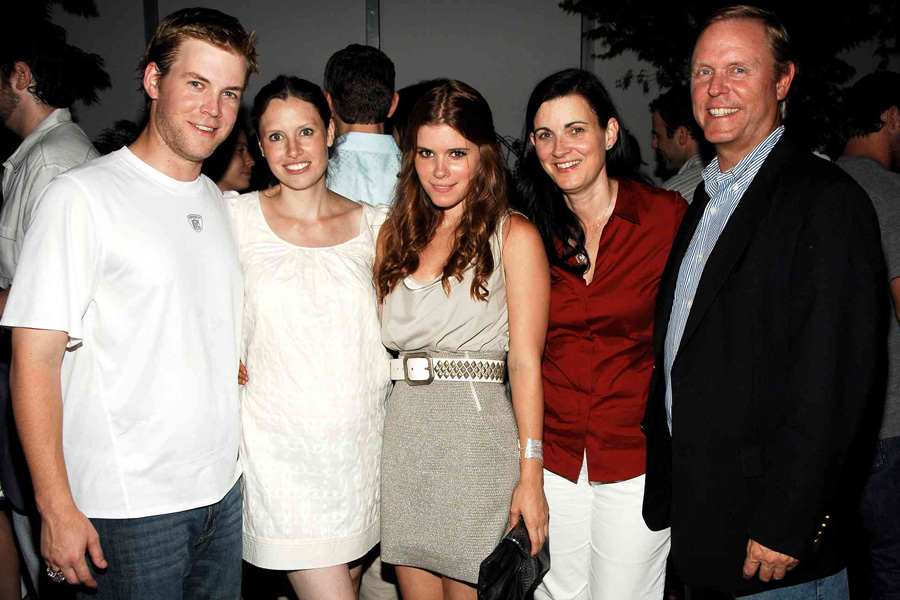
A Storied Football Heritage
Timothy Christopher Mara occupies a rare niche in professional football. His life is inseparable from a dynasty that helped define the NFL. The Mara name first entered league history in 1925, when Tim Mara founded the New York Giants. That origin point gave the family a permanent seat near football power.
Chris Mara was raised inside that atmosphere of continuity. His father, Wellington Mara, became one of the Giants most enduring stewards. His mother, Ann Mumm Mara, helped shape the family presence with poise and civic regard. Together, they raised 11 children, building a household steeped in obligation, discipline, and institutional memory.
This background gave Chris a singular perspective. He did not merely observe football culture. He inherited its customs, its rhythms, and its burdens. For him, the game was never abstract entertainment. It was a generational vocation with real consequences.
Family Bonds Across Two NFL Houses
Chris Mara also belongs to another celebrated football bloodline. His marriage to Kathleen McNulty Rooney Mara fused the Mara family with the Rooney family of the Pittsburgh Steelers. That union linked two of the NFL most recognizable ownership lineages. It also created a family relationship spanning rival clubhouses and distinct traditions.
The connection is more than symbolic. It reflects how deeply some families are woven into the league fabric. In one branch sits the Giants. In another sits the Steelers. Chris stands at the confluence of both, with his personal life reflecting football history itself.
His children further widened the family public profile. Kate Mara and Patricia Rooney Mara became prominent actors. Their careers brought the family name into film, television, and broader popular culture. Daniel Mara and Conor Mara remain part of the extended family story. The family therefore bridges executive suites, stadium boxes, and creative stages.
Building a Career Inside Giants Operations
Chris Mara began his formal Giants tenure on July 29, 2003. He was appointed Vice President of Player Evaluation. That role suited his background and temperament. It required observational rigor, patience, and a methodical eye for talent.
In player evaluation, the work is painstaking. Scouts track athletic traits, character signals, positional fit, and developmental horizon. Every report can alter roster construction. Every missed judgment can echo through several seasons. Chris operated inside this demanding machinery as the Giants navigated shifting competitive climates.
By the 2010s, his responsibilities expanded into senior player personnel work. That evolution mirrored broader changes across the league. Teams relied more heavily on layered decision making. Scouting, analytics, coaching feedback, and salary cap realities all demanded synthesis. Chris remained part of that architecture.
His tenure also reflects organizational continuity. Some franchises chase novelty at every turn. The Giants have often valued steadiness and inherited knowledge. Chris embodied that tradition. He worked close to the team core while remaining mostly out of the public glare.
Milestones and Timelines
Chris Mara story can be traced through a sequence of important dates. Those markers reveal both family history and professional progression. They also show how football lineage can span nearly a century.
| Year | Milestone |
|---|---|
| 1925 | Tim Mara founds the New York Giants |
| 1954 | Wellington Mara marries Ann Mumm |
| 1970s | Chris Mara marries Kathleen McNulty Rooney |
| Late 1990s to early 2000s | Chris works in football operations beyond the Giants |
| July 29, 2003 | He joins the Giants as Vice President of Player Evaluation |
| 2011 | He moves into senior player personnel responsibilities |
| 2010s | His daughters rise to greater public prominence |
| 2020s | He continues contributing to Giants personnel operations |
These dates show a life moving through overlapping eras. Family history began long before his own career. Professional responsibility came later, but it carried the weight of surname and expectation. In football, chronology often matters as much as talent.
The Craft of Player Evaluation
Player evaluation is an exacting discipline. It asks evaluators to reconcile athletic promise with practical fit. A prospect may possess speed, size, or charisma. Yet a team must still decide whether that player suits its scheme and culture.
Chris Mara spent years in that evaluative environment. The job often requires long travel, repeated viewings, and relentless comparison. One scout may notice footwork. Another may focus on leverage. Another may study resilience after injuries. The final verdict emerges from convergence, not intuition alone.
This work is often invisible to fans. Yet it undergirds the visible product on Sundays. A reliable offensive line, a disruptive pass rush, or a dependable receiver group begins with personnel judgment. The process is subtle, but the impact is tangible. Chris built his career in that concealed chamber of football decision making.
Modern front offices also demand adaptability. Data now travels alongside instinct. Medical reports, contract structures, and positional trends all shape each recommendation. Chris has worked through that transition period. His role has therefore sat at the intersection of old school scouting and modern operational complexity.
Public Image and Private Discipline
Unlike his daughters, Chris Mara has maintained a restrained public profile. He is known more inside football circles than in mass media. That relative obscurity is unsurprising. Personnel executives usually labor in silence. Their work becomes visible only after drafts, trades, or roster reshuffles.
Public discussion of the Giants has occasionally touched on family influence. That scrutiny comes with owning or serving a storied franchise. People want to know how titles are divided, how authority is allocated, and how legacy affects governance. In Chris case, the conversation has often centered on structure rather than spectacle.
He has remained tied to scouting and personnel functions across decades. That consistency suggests professional discipline. It also reflects a family culture that prizes long service. In a league driven by weekly volatility, steadiness can become its own form of authority.
Selected Family Roles and Connections
The Mara family network contains several notable football figures and public personalities. Their relationships illuminate how one household can influence multiple arenas. The table below summarizes some of the principal connections.
| Name | Relationship or Role |
|---|---|
| Wellington Mara | Father and longtime Giants executive |
| Ann Mumm Mara | Mother and family matriarch |
| John Mara | Brother and Giants President and CEO |
| Kathleen McNulty Rooney Mara | Spouse and family link to the Rooneys |
| Kate Mara | Daughter and actor |
| Patricia Rooney Mara | Daughter and actor |
| Daniel Mara | Son |
| Conor Mara | Son |
| Rooney family | Affiliated through marriage and Steelers ownership |
These relationships are not ornamental. They explain the environment in which Chris matured. Football was not a pastime in the Mara household. It was a civic inheritance. Family identity and professional identity were closely intertwined.
Key Takeaways
Chris Mara represents a distinctive blend of heritage and function. He is part of one of football most venerable families. He also built a durable career inside the Giants personnel structure. His work has centered on evaluation, judgment, and quiet institutional service.
His marriage connected the Mara and Rooney families, two of the NFL oldest dynasties. His children expanded the family presence into the arts. That combination gives his life an unusual breadth. It spans football ownership, executive labor, and cultural recognition.
His professional path began formally on July 29, 2003. It later extended into senior player personnel responsibilities during the 2010s and 2020s. Those roles demanded precision and patience. They also demanded loyalty to a franchise shaped by history.
In the broader NFL landscape, Chris Mara illustrates how legacy and operations can coexist. He stands inside a football lineage that began in 1925. He continues that lineage through scouting, discernment, and organizational continuity.